
William Browder *58
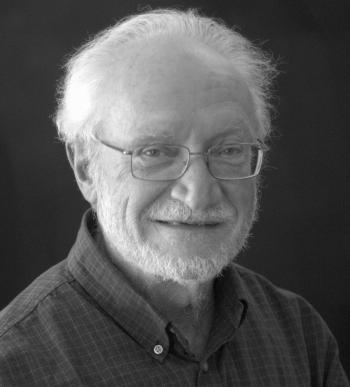
Bill Browder was born January 6, 1934. His father was Earl Browder, who was a former president of the American Communist Party, and his mother was a lawyer from St. Petersburg. Bill grew up in New York City, graduating with a BS from MIT in 1954. He received his PhD in 1958 at Princeton, under the guidance of J. C. Moore. His brothers Felix and Andrew also became distinguished mathematics professors, at Rutgers and Brown respectively.
From 1964 onwards, Bill was a professor at Princeton University. At the time, this 30 year-old was the youngest full professor in the history of Princeton's mathematics department. He was Chair of the math department from 1971- 1973, editor of the preeminent Annals of Mathematics from 1969-1981, and president of the American Mathematical Society from 1989-1991. He left a lasting mark on the AMS. For example, the ethics guidelines he championed, the first of their kind for that organization, remain in place to this day.
Browder was elected to the National Academy of Science in 1980, the American Academy of Arts and Sciences in 1984, and the Finnish Society of Sciences and Letters in 1990. In addition to his research accomplishments, Bill was an inspiring mentor. During his 60 years at Princeton, Browder was advisor to 34 PhD students. The awards his students won include a Fields Medal, an Abel Prize, two Wolf Prizes, and two National Medals of Science. His students were of great importance to Bill, and he treated them like family.
Browder was one of the key pioneers of algebraic topology. His work on the Kervaire invariant shed light on when an object which algebraically looks like a high-dimensional sphere is actually a sphere. This significant work from 1969 has ramifications which are studied to this very day. Also, his work on surgery theory for simply-connected manifolds turned the problem of constructing large-dimensional spaces into questions which could be studied by tools of abstract algebra.
But Browder was not merely a great mathematician who developed a massive machine which set the research careers of generations of scholars. He is one of those rare mathematicians with a global view of the subject, as one can see by examining the broad range of interests of his students. He had an uncanny knack for identifying in advance those areas of mathematics which would turn out to have tremendous intellectual impact.
Bill approached his interests with endless enthusiasm. In addition to his great love of mathematics, Bill was an avid flute player, regularly hosting music parties at his home, inviting a handful of musically inclined mathematicians for massive chamber music sessions. These sessions could last as long as 10-12 hours, with a dinner break, with food Bill prepared.
Bill was an inspiration to generations of mathematicians. He has left a great mark on the subject. His students and many other junior mathematicians remember back to him with gratitude.
Bill is survived by his wife, Lisbeth Moeller, and his children, Risa, Dan, and Emil Browder, and five grandchildren.
Memorial Resolution Committee:
David Gabai
Elliott H. Lieb
Peter Ozsváth
Zoltán Szabó